










Carriage Driving Reins
As with a lot of horse sports, some of the equipment used are steeped in tradition as well as personal preference, and carriage driving reins are no different.
History & Tradition
Historically and traditionally, carriage driving reins were leather and oiled brown instead of being dyed black to match the harness. This was for a number of reasons, the first being that good leather was desired to be used for reins, and inferior leather could be covered with black dye. Of all the pieces on your harness, it is important that your “steering and stopping system” not have flaws! Other reasons for brown oiled reins was that dye can make leather stiff and can also rub off on your hands and clothing, hence also why carriage drivers also wore brown oiled leather gloves. Showing up to church or that neighborhood gathering with sweaty, black dyed hands could be quite embarrassing! Brown oil could be easily washed off, while dye, well…you might be stuck with that for a while! This tradition still makes sense in the modern era for the same reasons, although admittedly, dyes have become a little better to “set” without coming off quite so much. However, if it gets wet, you still might have some problems with leaching. Brown reins and gloves are good!
Length
On average, stock Miniature single horse reins come 10’, Pony reins come 12’, and Horse reins come 14’. Certain vehicles with more leg room might require longer reins. In order to measure the necessary length of carriage reins, sit in your vehicle while someone else measures the distance from the horse’s mouth to your hands, and then add at least an extra two feet. Reins that are too short are dangerous, while reins that are too long are cumbersome to manage. Rein lengths for multiple horses put to a vehicle are a whole other article.
Size & Feel


How you hold your reins and how large your hands are can have a lot to do with what width reins are comfortable and effective in your hands. Those drivers who hold their reins like an English rider with the rein coming up through the bottom of the hand with the thumb on top can sometimes prefer narrower reins than those who hold their reins in the Achenbach method. With the Achenbach method, the reins coming into the hand from the top and being “squeezed” into the palm. If the reins are too narrow, they are harder to squeeze into the palm. Likewise, those who use the “English” style can feel like they have too much material between their fingers with wider reins.
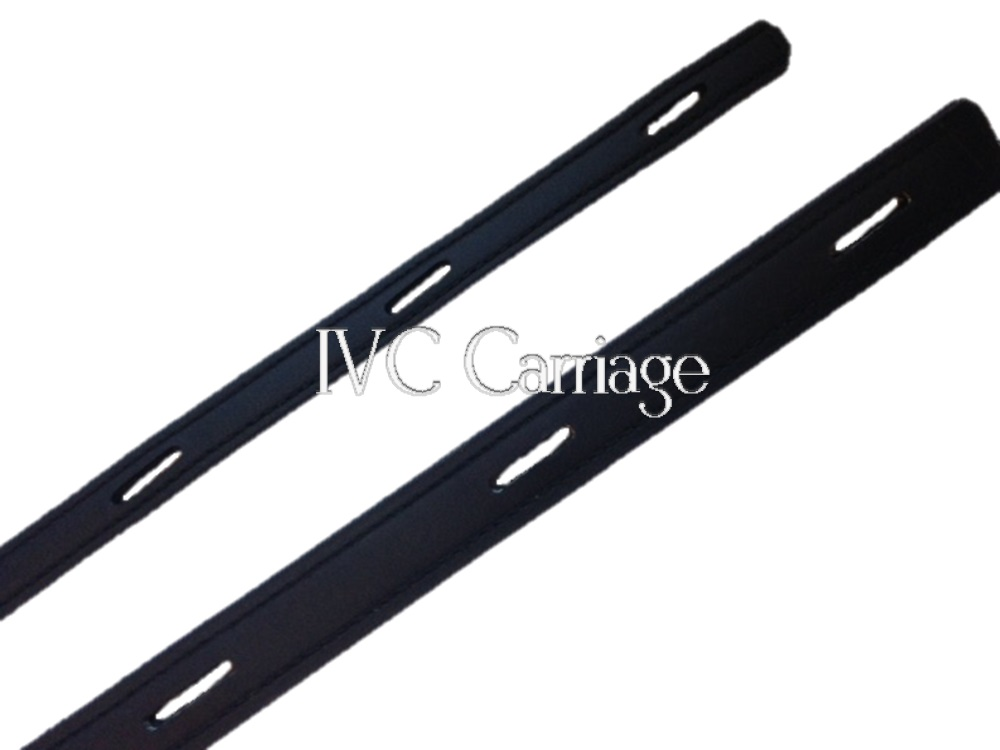
Generally, we find that ladies with very small hands (size 5 or 6) using the English method like ½” to 5/8” width leather reins. Ladies with average hands (size 7 or 8) and as well as men with smaller hands (size 8 to 9) like 5/8” width leather reins. People with hands larger than that tend to prefer ¾” leather reins. Those that use the Achenbach method tend to like ¾” leather reins, as they can squeeze them into their hands. Synthetic reins can be narrower in thickness than leather, so ½” or even 5/8” can feel extremely narrow in any hands, especially when driving a large horse. The horse size can also have a bearing on the size reins to select, as ½” reins on a larger horse would look quite out of place, while ¾” reins on a mini could be overbearing. All that being said, ¾” garment leather reins tend to be very comfortable in any size hand because they are “flexible” side-to-side and mold into the hand more securely. Regardless, the best way to determine which size reins work for you is to try them!
Material

We have already touched on it a little bit, but the material your reins are made of can have a difference in how they perform in your hand. Typical leather reins have a feel unmatched by any other material. They have just a bit of stretch and of course are spliced because they just don’t make 14 ft. long cows! A good harness maker will put the splice in an area so as not to interfere with harness terrets.

Synthetic reins are made of one piece of strapping, and have very little if any stretch. Some trainers and drivers prefer this, as they believe that there is a truer feel of the horse’s mouth than with leather. Of course, in order to match tradition, even synthetic carriage driving reins should be brown.

Pebble grip synthetic is also available in the hand ends of the reins with either leather or synthetic fronts. The pebble grip is great for people who have gripping issues with their hands or their horse is a heavy puller. Pebble grip reins do make it a little harder to let the rein slip through the hands for adjustment, though, but for some people that is good. Because of the extra material to make the “pebbles”, pebble grip reins can be heavier than regular synthetic reins, therefore the driver may consider getting a narrower width.

Web reins are also popular with people who want more grip, especially in obstacles classes and courses, or in the rain. They can slip through the hand if necessary, but the grain in the material provides good grip. However, web reins can be stiff. The fronts should be flat leather or synthetic to allow the reins to slide through the harness terrets.

The Bowman Ultimate garment leather reins tend to have superior grip because of the grain of the leather as well as the stitching and the flexibility, while the driver can still easily let the rein slip through the hand for adjustment. Being leather, they do require some care in the form of conditioning and proper storage in order to maintain their stitching and superior flexibility. In our opinion, once you have tried the garment leather reins, it is hard to go back to anything else!
Rein Accoutrements

Driving reins should have some form of closure at the end. This is in case the driver drops a rein (you’d be surprised how many of us have done that!), (s)he can pick the rein back up since it is attached to the other rein. The closure is typically done through a buckle on well-made reins. Less expensive reins may have come without some form of closure. This can be remedied by purchasing a double buckle rein swivel which can be unbuckled easily. Some drivers prefer to not use the rein buckle at all, but instead just tuck the end of the rein in the buckle keeper of the other rein. This would be in case the driver or horse becomes tangled in the reins, the reins would separate and not drag especially the person. You have to decide if that works for you.

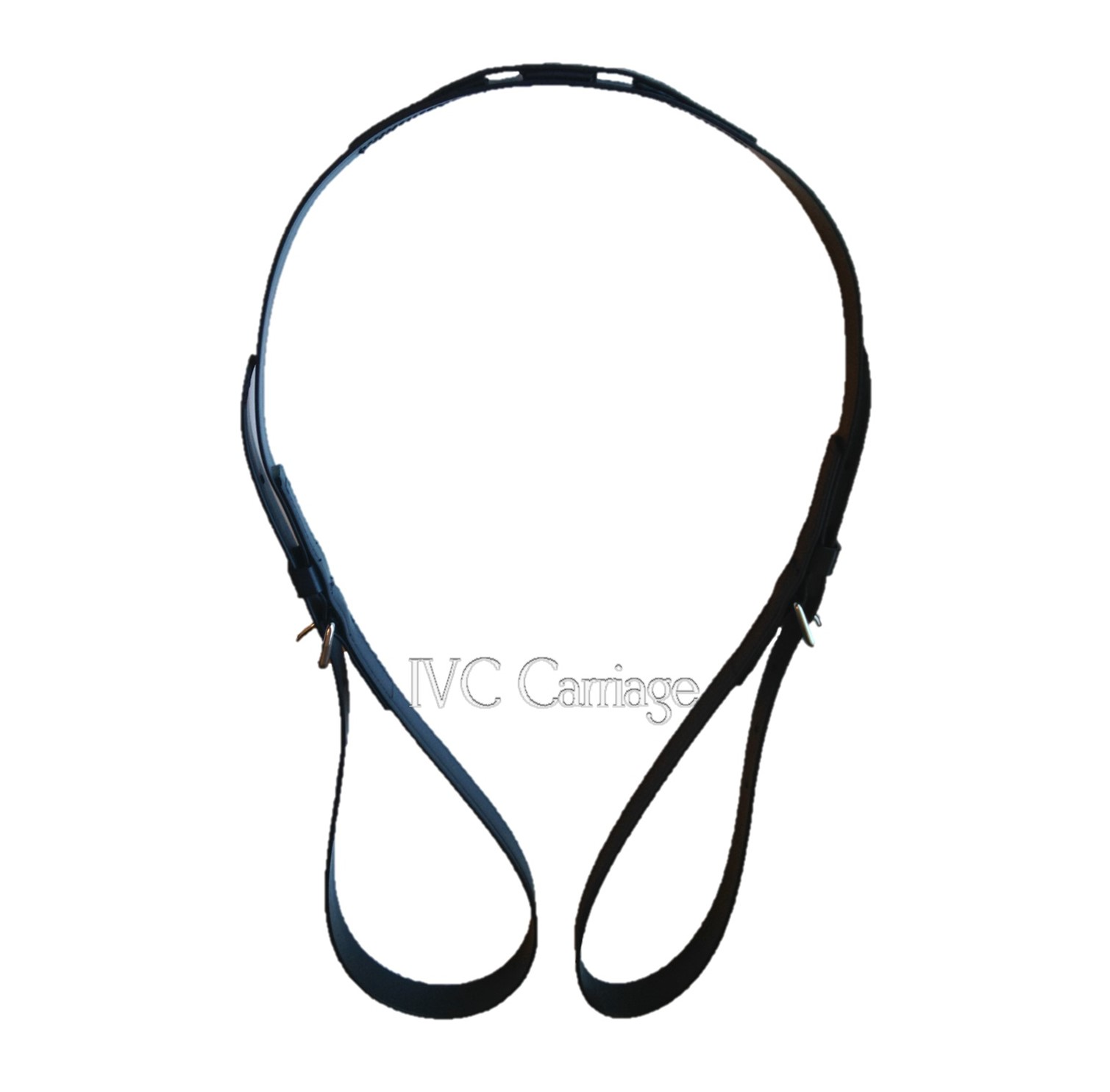
It is commonly understood that bight (end) of the reins should not be left to drag on the ground or at the driver’s feet while driving. They can easily get caught in places on the vehicle, driver, or passengers, creating an awful wreck. While some people just tuck the bight of the reins under their buttocks, a pinky loop can be a solution to this issue. The pinky loop can either be sewn into the reins or one added as an extra piece. This allows the driver to keep the reins from dragging anywhere, while also keeping them more “free” for adjustment, especially if they are on the verge of being too short for the turnout. Another purpose for using the pinky loop instead of sitting on the reins is to keep oily reins off light-colored cloth upholstered seats.
However, just like most ideas, there are those who are of the opinion that the pinky loop should never be used just in case the driver is (heaven forbid!) separated from the vehicle. Their pinky finger might just stay with the reins and leave the hand (ouch!). The opposite of that is those that sit on the end of the reins and accidentally have the reins slip out. As indicated before, that too can have a detrimental effect. All in all, you have to make a choice what to do, but whichever you choose, not “securing” the bight of your reins is definitely not an option.

Rein swivels are a handy accoutrement on driving reins, as they keep the reins from twisting especially if the driver uses the pinky loop. They tend to keep the bight neater in the driver’s hand so there is not the big “loop” in the reins as without one. Rein swivels can be sewn into the reins or purchased separately to buckle in the end of the reins.
Try lots of reins and see which reins work the best for you!
For a printable version of this article, see here.
Go to all IVC Educational Blog Posts
If you have arrived at this blog post directly, there is much more to see and read in our full blog!


- Choosing a selection results in a full page refresh.