










Carriage Driving Terms
Well, I sprained my foot yesterday, so here I am on the couch with my foot up under ice and the iPad on my lap. Seems like a good time to write a simple post.
We work with a lot of beginner drivers. They may have come from varied backgrounds, and the terminology that is used in carriage driving can be slightly different than what is used in other driving disciplines. The terms can also be different depending on the location. So here is a list off the top of my head that might help explain some of these differences. These descriptions are by no means complete. There are entire books that discuss carriage driving terms.
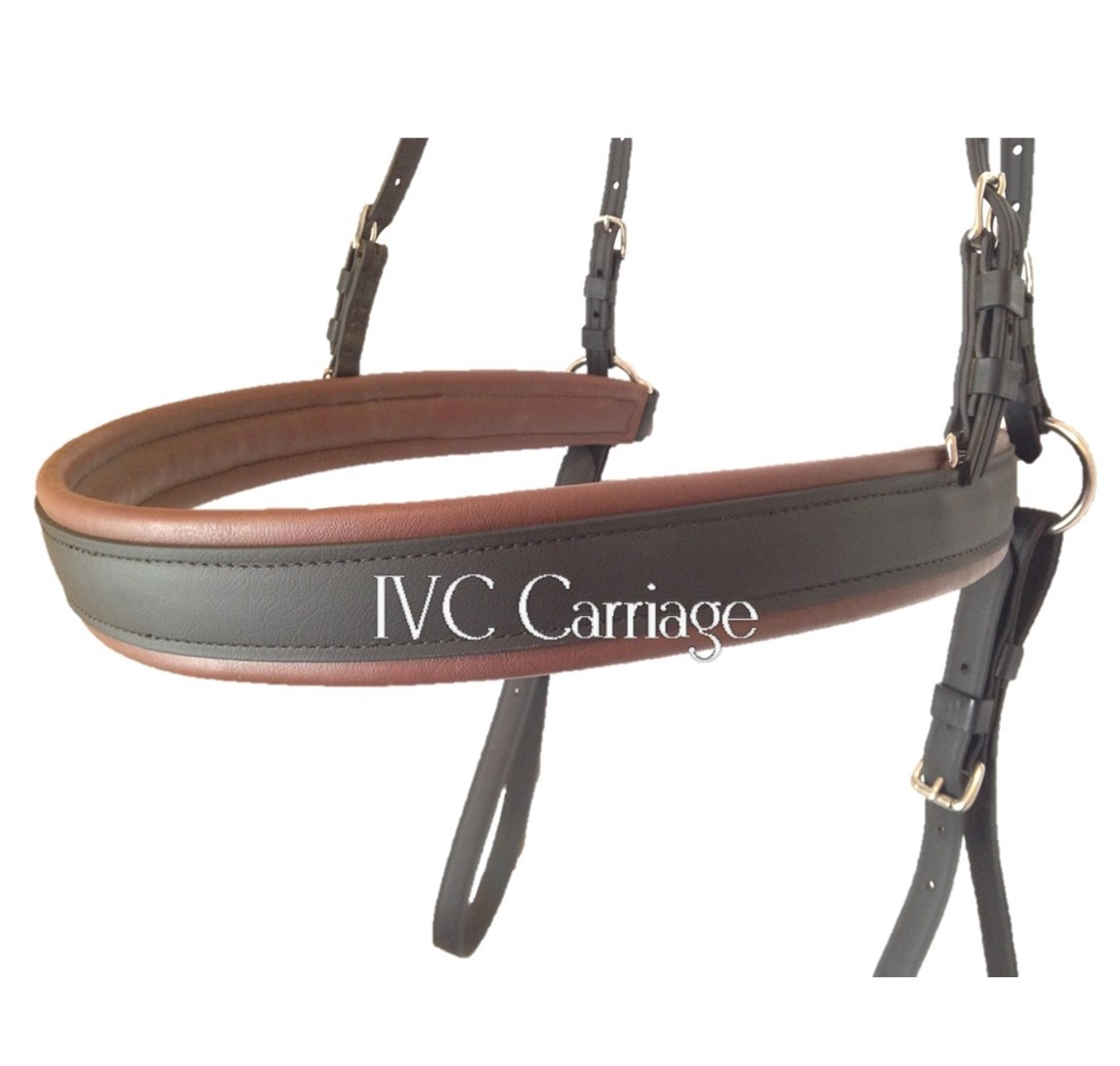
Blinders - part of the bridle to keep the horse’s focus forward, as well as not see the use of the whip coming so as not to react to it. Also keeps horse from seeing the vehicle “ chasing” him. Also known as blinkers or winkers.
Martingale - generally a false martingale is used in carriage driving, which goes from the collar to the girth between the horse’s front legs. Rarely is a standing or running martingale used in carriage driving. A running martingale is used more in the breed show ring.
Breeching straps - also known as holdbacks. Attached from the breeching around the horse’s rear to the vehicle shafts.
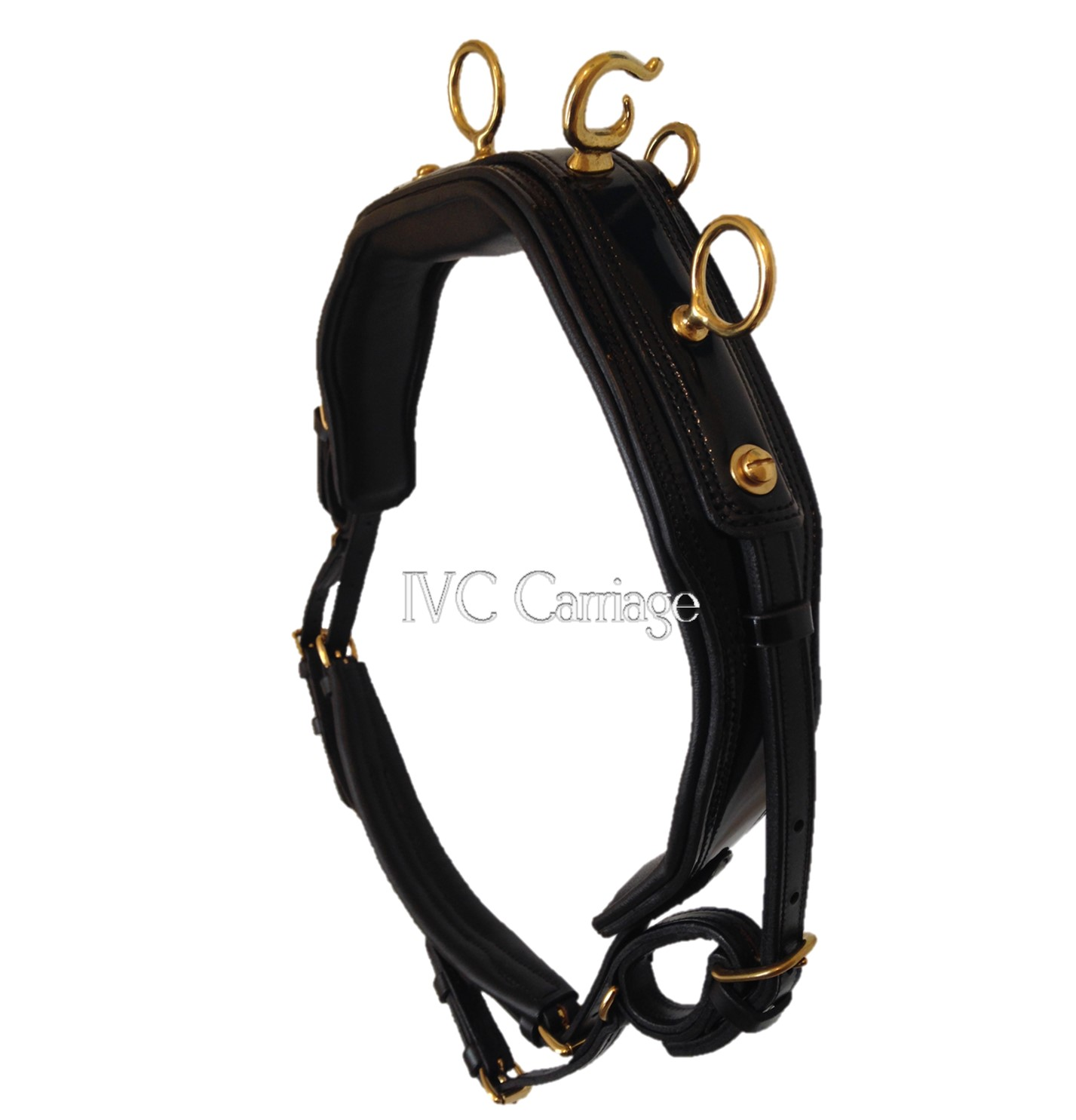
Saddle - some sources use “back pad” and other derivatives. Not to be confused with a surcingle, which is a training device with rings along the sides.
Turnback - also known as a backstrap. Part of the harness from the saddle to the crupper.
Crupper - part that goes under the tail. Have heard it pronounced both like “cup” and like “croop”.
Tugs - part of the harness attached to the saddle to hold up the shafts of the carriage. Some other disciplines call them “shaft loops”. (There are other “tugs” that attach to hames for a full collar.)
Traces - part of the harness that goes from the collar to the singletree from which the horse will pull. Other disciplines may call them “tugs”.
Singletree - part of the carriage to which the traces are attached. Depending on your location, it may also be referred to as a swingletree.
Cricket - carriage term for box-type footrest.
Whip - two meanings: the extension of the hand that a driver carries, and the correct term for an accomplished carriage driver.
Teamster - driver of a multiple hitch of draft horses.
Reins - some other driving disciplines use “lines”.
Put to - the process or status of the horse(s) being attached to the carriage. The less “formal” term is “hitched”.
Team - four horses put to a carriage. Some other disciplines use “4-up”.
Pair - two horses put to a carriage side by side. Other disciplines use “team”.
Tandem - two horses put to usually a cart, one in front of the other.
Cart - two-wheeled vehicle (generally).
Carriage - four-wheeled vehicle (generally).
Buggy - four-wheeled vehicle, generally not cut under.
Cut Under - form of carriage where the box is raised under the seat so that the carriage has a greater turning radius, and the wheels won’t hit the box.
Box - main body of the carriage.
Box Seat - where the driver sits.
Comment below if you know of other terms that are different between the styles of driving!
______________
Addendum (8/5/25) Here are some more based on questions I have received:
Water Hook - also known as a check hook. Hook on the top of the saddle to which the check rein was attached. It is known as a water hook because you had to undo it to be able to water the horse in a trough.
Overgirth - the secondary girth that holds the shaft tugs down to keep them from flipping up with the shafts, allowing the cart to tip over backwards.
Girth - the main girth to hold the saddle in place. A driving saddle girth does not need to be riding saddle tight.
Footman's Loop - a piece of hardware attached to the underside of the shaft to which a breeching strap is attached. Without these, the breeching straps would slide on the shafts, the breeching would not hold, and the vehicle could slam into the horse.
French Tugs - a form of tugs that wrap completely around the shafts. See article on this page for an entire discussion on types of tugs: https://www.ivccarriage.com/pages/educational-articles-horse-harness
Come & Get - carriage terms used to designate Right and Left directions (respectively) for the horse to turn. Draft horse people tend to use "Gee" and "Haw" for Right and Left.
Leader - the lead horse(s) in a Tandem, Four-in-Hand, or a Six Up.
Swing Team - two paired horses in the middle of a Six Up.
Wheeler - the horse(s) in the back hooked directly to the vehicle of a Tandem, Four-in-Hand, or Six Up hitch. The horses closest to the wheels of the carriage.
- Choosing a selection results in a full page refresh.
1 comment
Debbie
I’d be interested in why behind these:
Water hook
Over versus under girth
Footman’s loop
French tugs
’Gee vs. Haw
Many thanks!