









Holding the Carriage Driving Reins

When new drivers are starting out, one of the first questions they ask is, “How do I hold my reins?” There are correct and acceptable methods to hold riding reins. Class rules can specify those methods, and judges can penalize competitors for holding reins incorrectly. However, the only wrong way to hold driving reins in a US carriage show (or recreationally) is not holding them at all! I have photographic evidence of people doing so while standing because someone else is holding the horse. That is still incorrect if the horse is put to. I snapped the above photo at a 4-H show a few years ago of the mother "holding" the horse while the kid was on her phone waiting for a class.  Once the horse is put to the carriage, a capable warm body needs to be on the box seat with the reins and whip in hand. This is not negotiable. See this article for more information on that.
The vast majority of people I know drive with one rein in each hand, from beginners to upper-level drivers. Using the Achenbach and other one-handed (left hand anchor) methods is commendable, but not always practical in every situation, especially training a young horse, marathon driving, and teaching new drivers. It is so uncommon in CDEs, that the ADS driven dressage tests introduce driving with the reins in one hand for a few strides at the Preliminary level, not Training level.

We teach our carriage driving students to drive with the reins coming up from the bottom of the hand, just like you would if you were riding English. This does a couple of things. It makes giving half-halts on the reins easier by using your fingers instead of your whole hand, and it helps to put the whip in the correct position because we tip the hands at a 45-degree angle. If we hold the hands vertically like you would when you ride, it makes the whip straight up, and requires the driver to have to grasp the whip tightly so as not to drop the whip instead of balance it on his thumb and the butt of the hand. Grasping the whip vertically creates tension in the lower arm, and is ultimately tiring, as well as unforgiving on the horse’s mouth through the tight fingers and the reins. For more on whip selection and holding the whip, see this article.


There are some drivers who have the rein come into the hand between the thumb and index finger. If you drive this way, tip your hand so that the knuckles are up. This, again, will put your whip in the correct position. If you drive with your fingers up, the whip will be held out to the side and could catch on whatever you drive by.
The hands should be about 4-6" apart and horizontally even. I like to tell my students that they should pretend that they are balancing a dinner plate on their hands, and that there is an egg on that plate. Of course, the driver is going to need to move their hands forward and back to give cues to the horse, so a real dinner plate isn't going to be able to stay on the driver's hands, but the visualization helps the learner think about keeping their hands level, and not having one hand considerably higher than the other in most cases.

Even if you are familiar with holding the reins in two hands, it is good to be comfortable going from two hands to one just on a practical basis. I taught myself to be more proficient at it many years ago when I drove with a head cold, and had to keep reaching in my pocket for a tissue to wipe my nose! 😆 Driving with reins in one hand can be steadier on the horse’s mouth than the independence of two elbow and wrist joints holding the reins. I have used one hand on very sensitive horses to quiet the horse’s demeanor. We will also frequently put the reins in the left hand to cue the horse with the whip in the right hand so as not to throw the right rein away while cueing with that hand. If we need to reach forward with the whip to cue the horse in a certain spot, and keep the rein in the right hand, we will push that rein forward as well, while the contact stays on the left rein, thus cueing the horse to turn left. It creates confusion for the horse that can be alleviated just by transferring the rein seamlessly into the left hand. This is perfectly acceptable even in the carriage show ring to transfer between using one hand and two. In the photo above, I'm expressing my enthusiasm after going clear in Progressive Cones by raising my whip in my right hand while driving with the left.

If you are proficient in anchoring the reins in one hand to drive, it can be considered more elegant and proper in a US pleasure driving show. However, it won’t win you any points to drive with one hand if you are not very good at it! You are better off to drive with two hands well than drive with one hand poorly! I’m not going to get into how to hold the reins using the left as the anchor because it really requires a good instructor to teach you how to do that effectively.

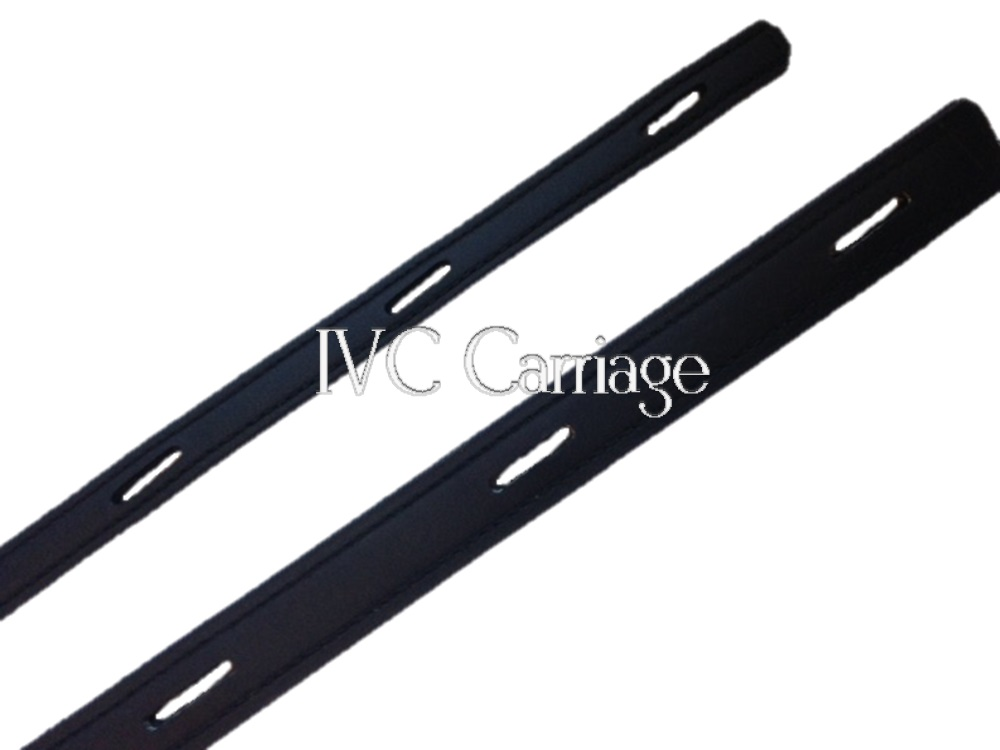
Hand Holds are something that certain drivers find beneficial in certain situations. Those drivers who lack grip strength find hand holds easier to grasp and keep in their hands. Some CDE drivers are using them in competitions to have better control of their horse. Since the hand holds are locked into place on the reins with buckles, it is important to remember that they don’t allow much adjustment of the reins while driving unless you take your hands out of the handholds. You need to be well aware of the setting of the handholds so that they are in the optimum position for both horse and driver.
We have additional articles available on styles of horse driving reins, as well as selecting horse driving gloves that go along well with how to hold your carriage driving reins. Oh, and just to clarify, in carriage driving, we refer to “reins” instead of “lines”. The term “lines” is more of a draft horse term for the same piece of equipment.
Go to all IVC Educational Blog Posts
If you have arrived at this blog post directly, there is much more to see and read in our full blog!


- Choosing a selection results in a full page refresh.
8 comments
Jane E Sprague
Thank you for a good article!
Christine Polka
THANK YOU! Very helpful!
Ellen Tom
Thank you for reliable information