









Horse Harness Trace Length
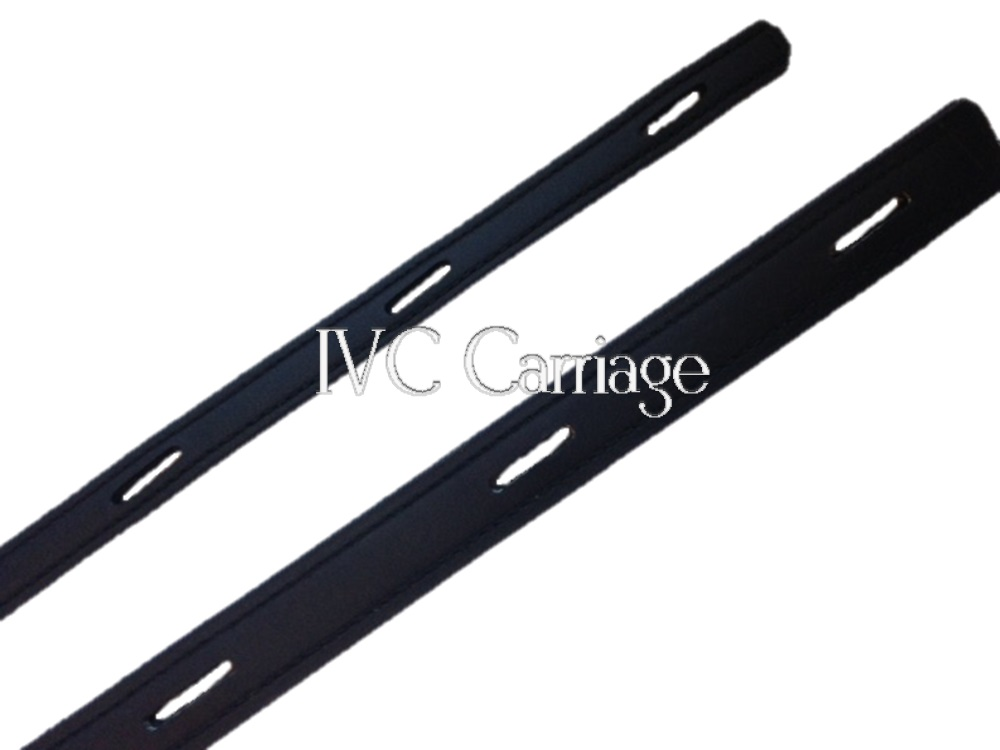
In carriage vernacular, traces are the pieces of the harness that go from the collar (either breast or full) to the singletree or splinter bar on the carriage. They are the part from which the horse pulls the carriage. In draft horse terms, they call them “tugs”. (In carriage terms, the tugs are known as the shaft loops that are attached to the saddle to hold up the shafts.)
We sell quite a few traces in our store. Many people don’t realize that the trace length has more to do with the vehicle than the size of the horse. It is not uncommon to need different length traces for certain vehicles with longer or shorter shafts. I learned this fact quite a few years ago when we built a new cart for a mini. The old traces fit the old cart just fine. When we built a new cart with shorter 48” shafts, all of a sudden those traces were way too long! We had a few choices. Either we had to punch holes in the front of the traces to put them to the breast collar, but then the traces stuck out in front of the mare by 6” and flopped around, or we had try to add a slot in the back of the traces for the singletree, and then have 6” sticking out by the dash, OR we just had to get new traces, and QUICK before the show coming up! We did manage to get those new traces. They became known as my “show traces” as our show carts at the time all had those shorter shafts.
This cart has very short shafts, and we had to order new traces to go with it. The pony is extending her left leg, and thus it looks like the shaft is behind the point of the shoulder, but this is a moment in time when the photo was taken.
Later, we bought a 13 hand pony, and eventually we ordered a good show harness for her. At the time, we either didn’t have the show cart, or when we ordered her harness, there wasn’t a place on the measuring chart for the length of the shafts. Regardless, when we got the harness, the traces were again way too long for the length of the shafts of the cart we were going to use for show. We, again, had to order traces that were shorter for that cart. Recently, when we bought another antique carriage, the shafts were quite long, so I had to have longer traces made for that same 13 hand pony. Using traces that are too short will make the shafts stick out way past the horse’s nose! We have a number of different trace sets in our tack room now to suit the different vehicles we have.
These shafts are very long, and the traces are too short. The shafts are past the pony's shoulder and could hit him in the neck during a turn. We ordered new traces for this cart after this.

So, how do you order new traces? If you have straight shafts that are made to be in line with the horse’s point of the shoulder, that length usually correlates with the length of the shafts from the singletree to the tips, i.e. if you have 76” shafts, you probably need about 76” traces. You want the ends of the traces to be caught in the keepers of the breast collar, but not stick out much past the front keeper of the collar.
If you have marathon or presentation shafts that attach at the saddle, you have to use a different method to measure for the traces and not use the shaft measurement. If you do, your traces will be way too short!
These shafts are not meant to be used all the way up to the point of the pony's shoulder. If we used the measurement of these shafts, our traces would be way too short. You need to understand how your horse is correctly put to the vehicle before you order traces.
Measuring for Traces with an Existing Harness
The best way to measure for new traces with an existing harness is to put the horse to the vehicle in the correct position in the shafts, and then measure from the singletree to the front keeper of the collar, keeping the singletree square and not forward or back on the side you are measuring. This will give you the total length of traces that you need. Make sure that your horse is in the correct location (forward and back) in the carriage. Again, for most typical carriages, this means that the shaft tips are at the point of the shoulders. For vehicles with shorter shafts that don't go all the way to the point of the shoulder, again, you have to understand where the horse is correctly in the vehicle before you measure for traces.
For vehicles with adjustable shafts (front and back), pay attention to the length of the space between the horse and the vehicle. This length varies depending on the vehicle style and the size of the horse. There are also rules for certain competitions for the minimum length between the horse and the vehicle. You need to check those rules. For many of the vehicles with adjustable shafts, the shafts are shorter, meaning that again, they end farther back from the horse's point of the shoulder. For vehicles with "swan neck" shafts, that usually means that the tug sits at the highest point of the "neck" which could put the shafts back away from the shoulder. We have more on the types of carriage shafts here. It may be helpful for you to peruse that article if you don't entirely understand what shaft types there are before you measure for your new traces.
If you want to measure from the collar buckle for the “working hole” to give the harness maker that measurement, that is fine, too, but that won’t give you the total length you need. You can measure to the buckle, and then add the length from the buckle to the front keeper. Not every brand of harness breast collar has the keepers in the same position or the same number of keepers in the front of the collar depending on how it is built. Just because your friend’s traces fit their horse and vehicle with the same length of shafts as your vehicle doesn’t necessarily mean that their traces will fit your harness and vehicle, especially if the size of the collar buckles is smaller! You need to measure your own equipment if you want your turnout to be perfect.
Measuring for Traces if You Don't Have a Harness
If you don't have a breast collar for which you are getting matching traces (i.e. you are ordering the breast collar and traces together), then you need to measure from your singletree to the point of the horse's shoulder, again, paying attention to how the horse is correctly put in the shafts, and keeping the singletree square and not forward or back on the side you are measuring. Please reread the above paragraph on measuring for the different types of vehicles, but instead of measuring to the front keeper on the breast collar, you will just have to measure to the point of the shoulder to give the harness maker enough information for your harness.
Measuring the Vehicle for Different Horses

This mare is long, and this carriage fits her well.
Her son is shorter bodied, and thus looks like he is out in front farther. We are using the same traces for both ponies put to this carriage.

If you have multiple horses that will use the same carriage, it won’t really matter what horse you use to measure in a carriage unless you use a dramatically different harness on each horse. Again, the traces generally “go with” the vehicle. We have a few different ponies, and some are longer than others. Since the pony’s shoulders should be in line with the shaft tip, the length of the pony in the back does not matter for a particular vehicle. The trace length is the same for all of the ponies put to that carriage. If you get different shafts for a vehicle, then you will have to measure the new shafts for the new traces.
Trace Width and Thickness
Another measurement, as I eluded above, is the width of the traces. This measurement mirrors the INSIDE width of the collar buckle. If you measure the outside of the buckle, your traces will come too wide, and they won’t fit into the collar. If you are purchasing traces from a company that did not make your harness, it is also a good idea to give the thickness of the traces needed so that the traces will fit into your breast collar keepers. Some traces are cut thicker for the integrity and strength of the material, or even the discipline for which the traces were made. Carriage traces tend to be thicker due to the heavier weight of typical carriages versus lightweight breed show vehicles.
Sewn-In Traces
If you have sewn-in traces on your breast collar, the only way to deal with traces that are too long is to add a slot for the singletree on the end, or get a new breast collar and traces. If the traces are too short, you can add trace extenders, but it is somewhat of a “quick fix” when ideally the traces fit the vehicle, especially if you are competing or using the turnout in extreme conditions, like up and down hills or fast driving.
The next time you purchase a new vehicle, take a measurement of the shafts to see if your current traces will fit before you get ready to take the vehicle to an event. Most harness makers need time to build your traces to fit your measurements. Some harness brands have standard size traces, and we keep some of those in stock to have on hand, but they are in synthetic material, not leather. If you need leather traces, plan ahead.
Go to all IVC Educational Blog Posts
If you have arrived at this blog post directly, there is much more to see and read in our full blog!


- Choosing a selection results in a full page refresh.
2 comments
Mary
Is there guidance/a rule about how big the carriage should be in relation to the horse?
Daphne Smith
Very informative . Thank you so much for sending to me.